

Viruses in Space
In space, no one can hear you sneeze!

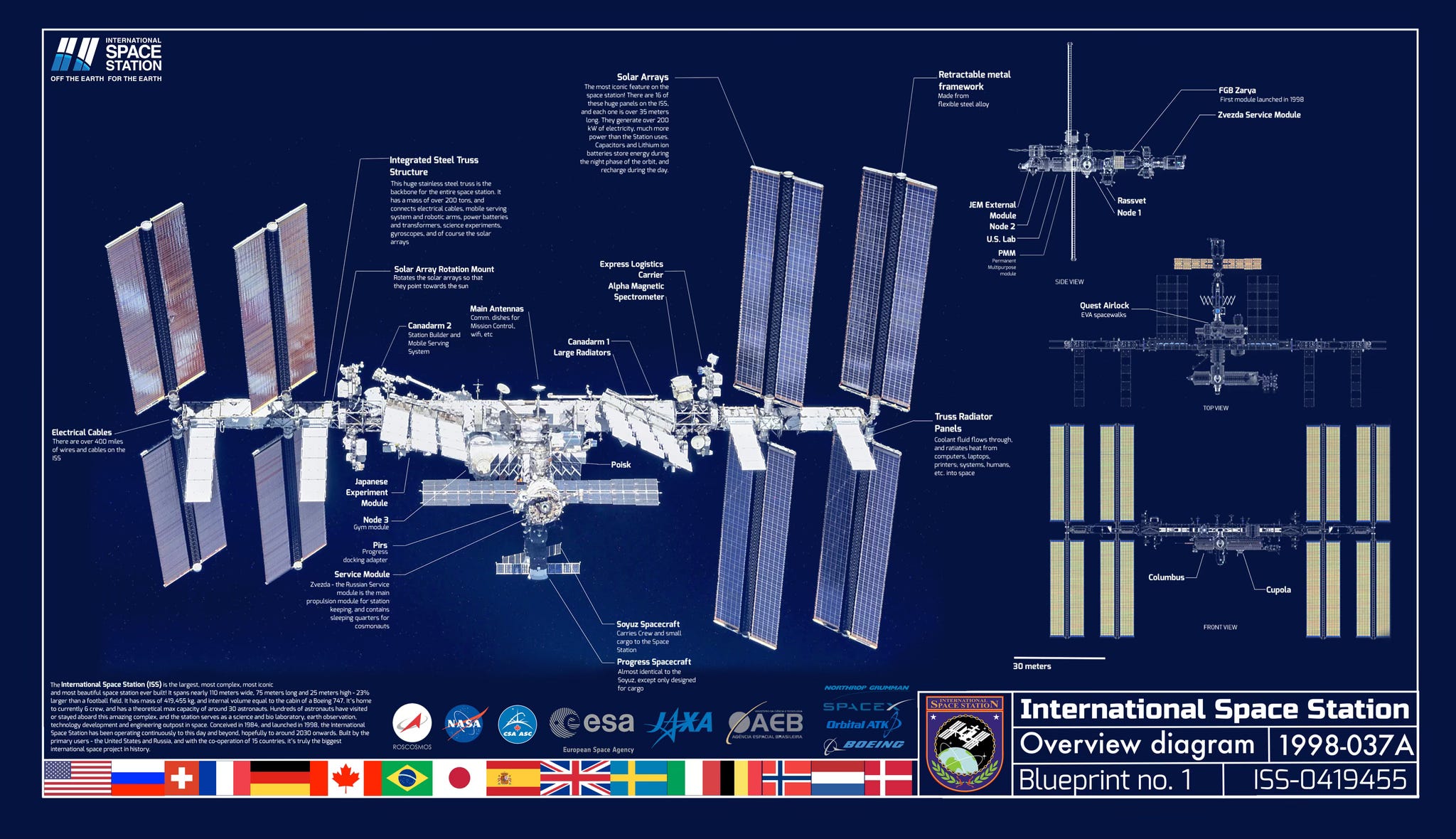
Daniel Molybdenum/NASA/Roscosmos, with the help of John Chryslar and others., CC0, via Wikimedia Commons
Unspoken Truth behind Space Travel?
Contemplating space travel makes some people giddy. Imagining the beauty of unexplored vistas and excitement of discovering new regions of our universe excites many of us. Of the many potential discoveries in space, finding life is perhaps the most exhilarating. Thus, we explore because it is a human characteristic to explore.
We are explorers for many subtle reasons. Exploring the solar system is done for at least two reasons. Firstly, are we alone? However, there are three divided camps of scientists who weigh-in on what sentient, extra terrerstrial life means for the human race. One camp believes most ET will be benign since finding sentient beings would imply subliminating evolutionary impulses of violence— the survival of the fittest (if you will?). The other camp believes sentient life will be a hostile, hell-bent entity plundering us for their own survival. The final camp believes we are pretty much the only sentient beings because technological immaturity dooms any species before it is able to venture to any other Solar System capable of hosting life similar to itself. Technology is a two-edged sword that comes with the baggage of warfare, over-crowding, pollution, and life-ending famine.
Secondly, we must explore to ensure our own survival. Moreover, intrepid space explorers insist that for humanity to survive its own technlological immaturity, it must venture and populate other parts of the Solar System. So-called visionaries like Elon Musk, Neil DeGrasse Tyson, the late Stephen Hawking, the late Carl Sagan, and Bill Nye (of the Planetary Society) call for the eventual off-world settling to Mars (to stave-off our potential extinction). While these men believe our planet must be saved first, and it will be our children’s children who will populate Mars—our generation will need to lay the groundwork for the eventual migration.
Those are, in part, the reasons for the space program. Namely, colonizing Mars and the Moon is for the benefit of humanity. While many individuals believe space exploration is a waste of time or the moonshot (itself) was an elaborate hoax perpetrated by the US government to bankrupt the Soviet Union, there appear many more who don’t believe the hoax theory or the boondoggle issue. Moreover, the one reason for exploring the solar system is to mine it for its commercial value. The amount of helium on the face of the moon is enough enrich a country like the US (or China, for that matter) for decades.
Is There a Viral Threat to Life during Space Exploration?
The short answer is no. However, among one of the many issues of plaguing space exploration presently is micro-organisms spreading from human to human. While I am not trying to elicit undue fear, viruses and micro-organisms (like bacteria) pose different sets of issues to intrepid explorers. Outer space is extraordinarily unforgiving—she is a harsh mistress, if you will! Namely, space trave weakens the immune system.
One careless mistake spells potential doom. US’s NASA and other countries take space exploration very seriously. However, we have many instances of catastrophic losses or potential accidents—from Apollo One to Apollo 13 to the shuttle Challenger disaster to the current stranding of the astronauts from the Boeing Starliner on the International Space Station (ISS). However, what is not spoken is the current standards taken to prevent the spread of earth-originating bacteria and viruses to the ISS. All potential astronauts must undergo a one week isolation prior to launch to the ISS. Namely anyone who ventures to the ISS is supposed to be healthy. However, the space environment (or the milieu of the ISS) elicits spike in human-spread viruses on the station. Moreover, 51 percent of astronauts who have ventured to the ISS experienced re-activated herpes type I viruses (cold sores). The greater threat is the potential for some dormant virus to overtake all crew members thus rendering them completely incapacitated.
Where do the viruses Originate?
For anyone who has a had a coldsore, venturing to the ISS will very likely cause the dormant virus to re-appear and potentially spread to your fellow shipmates. Cold sores are a type of Herpetic virus. Quoting a study in the journal Astrobiology by Bruno Pavletic and co-workers from the German Aerospace Center in Cologne,
“In addition to infection by reactivation of latent viruses, there is also a possibility of virus infection on space missions that increases the risk of outbreaks in modules and habitats. Due to the limited possibility of identifying the cause of infection in space, it is challenging to recognize viral infections in addition to treating them“ (Pavletic).
The micro-gravity and radiation of space weakens the human immune system to the point where individuals will express dormant viruses. Expressing Epstein-Barr virus is not uncommon, as well. Seemingly healthy people return to earth after a stay on the ISS less healthy than when they left the planet.
Potential Solutions?
Addressing viral outbreaks with acyclovir (a current standard treatment) has limited potential since human immune system is compromised by space travel. Acyclovir has the potential to do more harm than good. However, certain metals are known to deactivate viruses—copper, silver, and their alloyed metals can deactivate potential viruses. More to the point, utilizing copperized or silverized surfaces inside space-faring vessels would potentially lessen viral contamination. However, the solution is still being investigated. Sterilizing the interior of the spacecraft with plasma radiation is another solution. However, quoting Pavletic and co-workers,
“Interestingly, full microbial sterility of spacecraft in human missions is hard, if not impossible, to achieve because astronauts themselves represent a reservoir of
microbes that can cross-contaminate the environment“ (Pavletic).
High tech HEPA filters are employed in the ISS, presently. The HEPA filters provide a some measure of protection. Perhaps, utilizing high tech filtration in conjunction with copperized or silverizered interior surfaces maybe the solution for the next generation of ISS once the present ISS is decommissioned.
One other un-mentioned method is the effect of ultra violet radiation on viruses. Viruses become inactive in the presence of ionizing radiation. Namely, quoting Pavletic once more,
“… research of viral UV-stability could be used to develop postflight UV-based sterilization of spacecraft cabins as an easy and efficient method for viral elimination. It would be especially interesting to further investigate the inactivation of human pathogenic viruses by UV radiation …“ (Pavletic).
While he mentions this promising development, it is up to humanity to develop better medicines of treating and preventing the spread of human viruses. For this development we all await!
When our children’s children venture to Mars and the Moon, we will all be heroes once again. Just as Apollo 11 made us heroes — we will say, it was a small step for a man, but a leap for humanity. There is a spiritual aspect to being an explorer.
Bruno Pavletić, Katharina Runzheimer, Katharina Siems, Stella Koch, Marta Cortesão, Ana Ramos-Nascimento, and Ralf Moeller. “Spaceflight Virology: What Do We Know about Viral Threats in the Spaceflight Environment?“ Astrobiology, 2022 22:2, 210-224.