

The Intersection of Machine Learning and Safe Plastic
Plastic poisoning is here to stay, but we may be able to save our children’s children

Introduction
Of all the plastic generated, less than 10 percent is eventually recycled or upcycled (Rosenboom). Much of the remainder pollutes the biosphere or contaminates the water table. It is a known fact that nearly every individual on our planet has plastic nanoparticles and microparticles circulating through their blood. That should be enough to spark outrage in everyone. However, much of the world’s population is distracted by the political shenanigans of Donald Trump and his ilk. Those few scientists who are still working on breakthroughs for the betterment of humanity do so quietly.
Initially, plastic was conceived and invented in the 19th century, gaining widespread use and improvements in the 20th century (Baekeland). Now, in the 21st century, we see the ramifications of plastic’s widespread adoption in the form of the poisoning of the biosphere. Numerous studies are being published in scientific journals worldwide.
Artificial Intelligence, particularly through Machine Learning, can be used to tackle the issue of safer plastics. While many harbor fears about Artificial Intelligence, it is essential to remember that a machine has no soul, cannot bear children, cannot be loved, and will ultimately replace human labor in seemingly routine tasks. While there is currently a temptation among some unscrupulous individuals to exploit the vast amounts of data accumulated by the US government and other entities, Artificial Intelligence will need to be reined in by local, state, and, hopefully, the federal government. Moreover, Artificial Intelligence can do much good if employed ethically.
Utilizing Artificial Intelligence
In groundbreaking studies from around the globe, we read study after study that employs machine learning for the betterment of humanity. In a study published in the journal Nature Nanotechnology, researchers from the US and Taiwan utilized Machine Learning to discover bio-based replacements to fossil-fuel-based plastic. In a nutshell, Artificial Intelligence aims to find biodegradable replacements. While individuals’ habits may not change (widespread littering may never disappear), reducing the amount of toxins in the biosphere may spare our progeny some of the fates that await the unfortunate among us.
In the study mentioned above, the research group developed a biodegradable composite from non-fossil fuel materials. The materials consisted of a nanocomposite cellulose, a type of plant fiber; nanofabricated Montmorillonite, a clay-like material originating from volcanic materials; glycerol and gelatin, biodegradable molding agents (plasticizers). The use of Machine Learning allowed the researchers to “predict the viability of the plastic” in its utilization as a safer form of plastic. More to the point, once there are enough data points, the Machine can, in theory, predict the best potential plastic for synthesis.
While this study is one among many, it illustrates the potential usefulness of Machine Learning in augmenting human capabilities. As I mentioned earlier, Artificial Intelligence is, of itself, just a tool. However, we must be cautious about who uses it.
References and Footnotes
Baekeland, Leo H. "The synthesis, constitution, and uses of Bakelite." Industrial & Engineering Chemistry 1.3 (1909): 149-161.
Hao, Zheng, Qianhong Wang, and Yongming Luo. "New Technologies Call for New Pathways: How Does Machine Learning Pave the Way for Discovering Optimal Green Plastic Additives?" Environment & Health (2025).
Kida, Małgorzata, Kamil Pochwat, and Sabina Ziembowicz. "Assessment of machine learning-based methods predictive suitability for migration pollutants from microplastics degradation." Journal of Hazardous Materials 461 (2024): 132565.
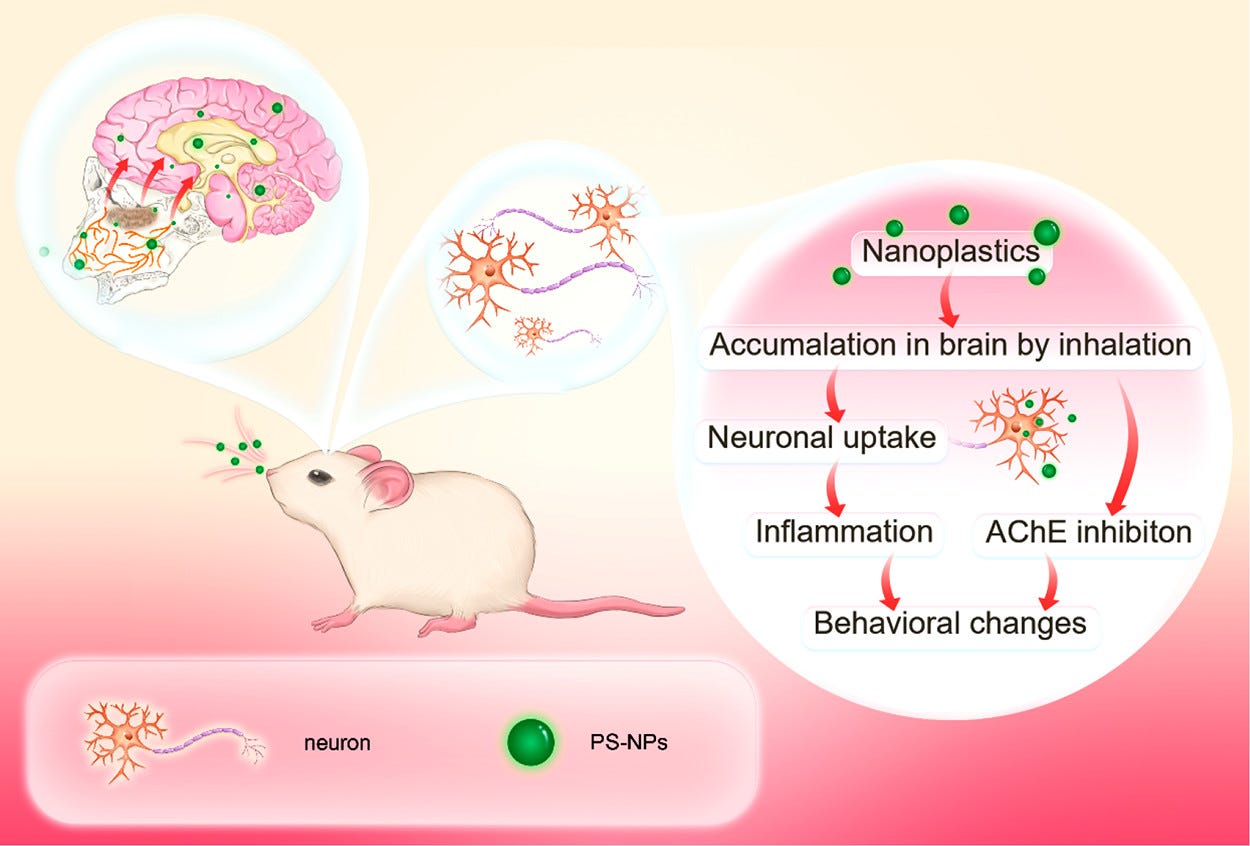
Liu, Xiaoyan, et al. "Bioeffects of inhaled nanoplastics on neurons and alteration of animal behaviors through deposition in the brain." Nano letters 22.3 (2022): 1091-1099.
Rosenboom, Jan-Georg, Robert Langer, and Giovanni Traverso. "Bioplastics for a circular economy." Nature Reviews Materials 7.2 (2022): 117-137.