

Science Notes
Tales of Ecology in the Anthropocene

Legionnaire’s disease Redux
Legionnaire’s disease burst onto the headlines in 1976 when 182 individuals from an American Legion convention in Philadelphia contracted an unusual form of pneumonia. This respiratory illness is an aggressive bacterial form of pneumonia, and 29 of 182 individuals died in Philadelphia that summer. The source of the bacteria was the air conditioning units. The mist of contaminated air easily crept into the lungs of the convention-goers.
Legionella bacteria live in aquatic environments, and they can easily contaminate hot tubs, air conditioners, and other plumbing systems. The standard decontamination method is to apply strong bleach or other chlorinated solutions. However, a recent report from China claims Legionella bacteria are becoming tolerant to chlorine decontamination methods (Yuan). While this report is preliminary, it is worrisome. The scientists claim that low doses of repeated chlorination induce tolerance. This may be something to keep an eye on for the future.
Winn, W C Jr. “Legionnaires’ disease: historical perspective.” Clinical microbiology reviews vol. 1,1 (1988): 60-81. doi:10.1128/CMR.1.1.60
Yuan, Xiaofei, and Yan Zheng. “Repeat Prolonged Chlorination at Low Dose Induces Chlorine Tolerance in Legionella pneumophila via Viable but Non-culturable State.” Environment & Health (2025).
Antimicrobial Resistance
As climate change continues to bear down on the world, one neglected aspect is the impact of climate change on antimicrobial resistance. A warming planet causes pathogens to alter their metabolisms. A formerly effective antibiotic will be readily metabolized when pathogens are altered. Moreover, it is an example of evolution in action. This moving target puts the world population in jeopardy.
Scientists are trying to address the problem through the elucidation of the gene sequences of the altered bacteria, computational modeling of bacterial enzyme processes, and applying newer antibiotics to the problematic pathogens. All in all, the problems behind antimicrobial resistance impact marginalized and poor communities the most.
With the gutting of US AID by DOGE earlier in 2025, bringing much-needed antibiotics to marginalized communities is the impetus for the research addressing antimicrobial resistance. What remains to be seen is the impact the research will have on the long-term prospects of those hurt by the DOGE cutbacks.
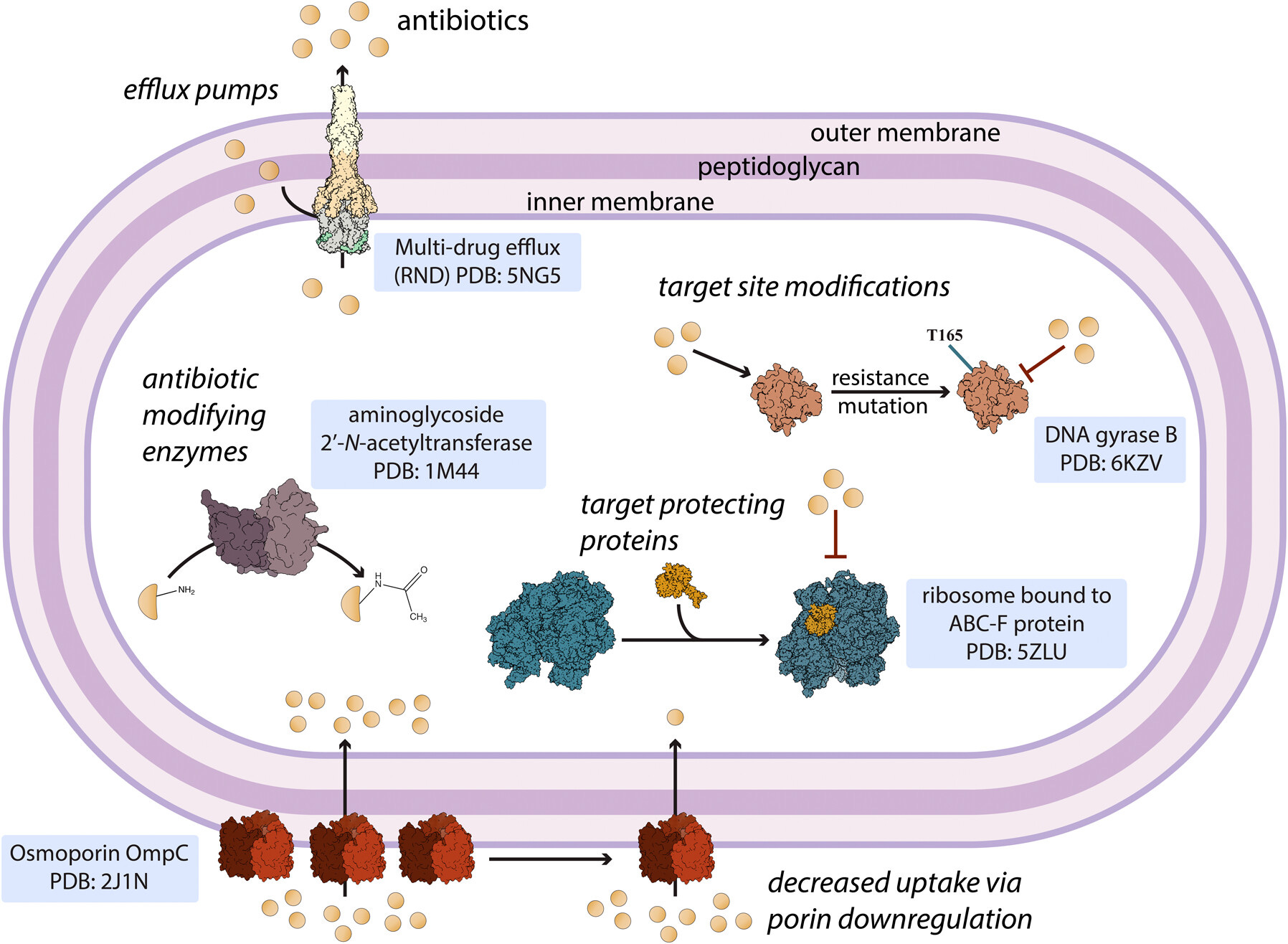
Paddy, Isaac A., and Laura MK Dassama. “Identifying Opportunity Targets in Gram-Negative Pathogens for Infectious Disease Mitigation.” ACS Central Science 11.1 (2025): 25-35.
Toxic Metal Accumulation in Vegetation: Blessing or Curse?
Lead, mercury, and aluminum are found throughout the biosphere. They find uses in every part of our lives. From cars to building materials, metals find use in every aspect of modern life. Because these metals are part of our daily lives, they can impact our health. Among the many important problems in modern ecology, there are those that are often overlooked. The above-sighted toxic metals have not completely disappeared from the biosphere. The soil, vegetation, and animals (humans included) have absorbed the toxic metals. Moreover, the deposition of toxic metals in vegetation should concern us if we did not know better. How often has someone chopped down a tree only to use it for firewood? While using firewood may be a good idea, it should make us pause and wonder whether the tree we just chopped down is loaded with toxic metals.
If the trees, shrubs, and grasses did not absorb so much of the polluting metals, we would see an uptick in cancers, birth defects, and poisoned children. Moreover, before the banning of toxic lead and mercury in the 1970s, children impacted by metal poisoning saw declines in IQ alongside behavioral issues. However, toxic metals are still being used and can be found in the biosphere. The greening of cities and suburbs has affected the health of countless lives. Excesses of toxic metals could not only beautify towns across the US but also save lives.
Landis, Joshua D. “Storage and Export of Atmospheric Hg, Pb, Al, and Fine Particulate Matter (PM2. 5) from Forest Trees.” Environmental Science & Technology (2025).
Obrist, Daniel, et al. “Previously unaccounted atmospheric mercury deposition in a midlatitude deciduous forest.” Proceedings of the National Academy of Sciences 118.29 (2021): e2105477118.