

Quick Note: Targeting Cancer?
Addressing Metastasis in Hard-to-Treat Cancers.

Cancer deaths took the lives of more than 600,000 people in the US in 2022 (CDC). The vast majority of these deaths occurred in individuals where the cancer had metastasized (—migrated to other, more vulnerable parts of the body). Coming into the treatment sphere, however, is the concept of a newer, targeted radionuclide therapy. Radiation therapy has been utilized in past treatment regimens but is finding more utilization through an internal administration of radionuclides in tandem with prodrugs.
Prodrugs are, for the most part, are molecular entities that must be modified to reach their target and be ultimately therapeutic. A drug may need to be put into water, but it may not be able to be dissolved in water. Thus, the drug must be re-formulated to be put into water (Stella). This is the concept of a prodrug, and it is nothing new.
Moreover, it needs to be noted that external applications of radiation and chemotherapy produced many side effects—leaving many feeling ill for days, if not weeks. The new regimens do not produce the same ill-effects, but once again— the therapies are in the testing stages.
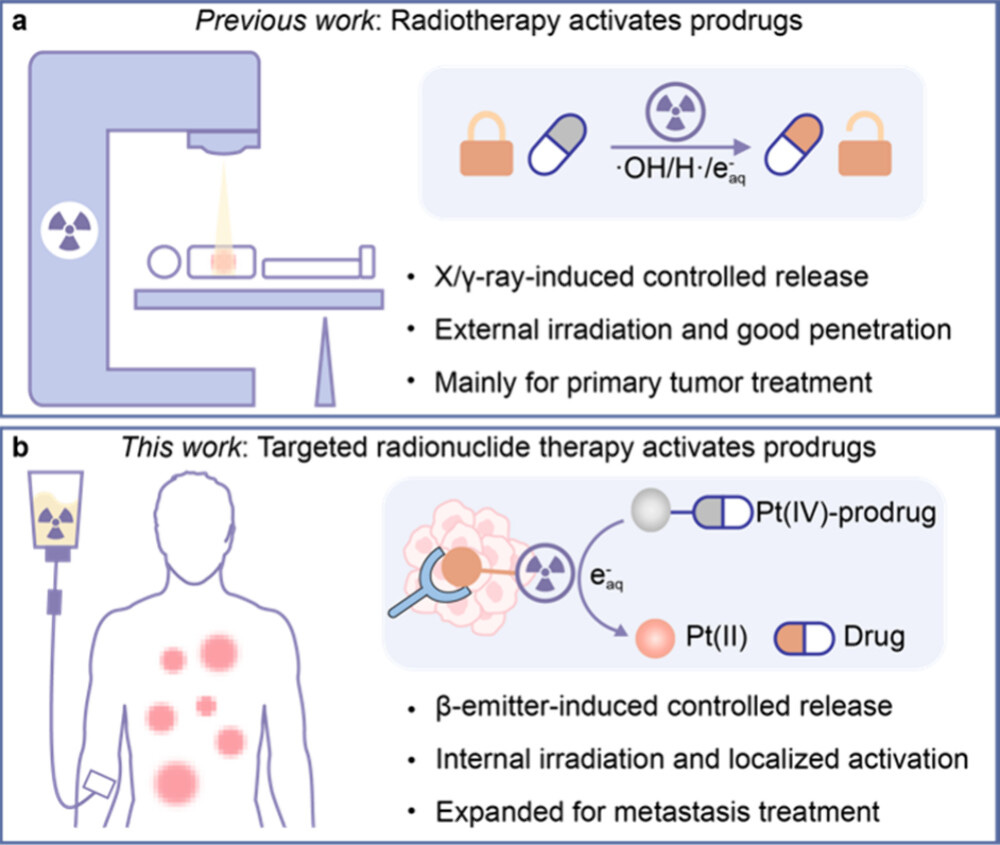
Newer Therapies?
These newer therapies are still in testing stages and are not without controversy. Perhaps, the most significant controversy—if one wishes to label a controversy, is the finding that internal administration of radionuclides increases immunological responses. There is nothing truly new about that bit of news. Scientists have reported increases in immunological responses with radiation since the days following the second world war. It is a concept known as hormesis (Wan). However, it is unclear whether other mechanistic explanations can be attributed to the boost in immunological responses.
One can think of hormesis in the same way that one can think of the production of vitamin D in the body. The body needs vitamin D to be healthy and produces it upon exposure to minimal amounts of sunlight. Moreover, too much sunlight produces cancerous tumors.
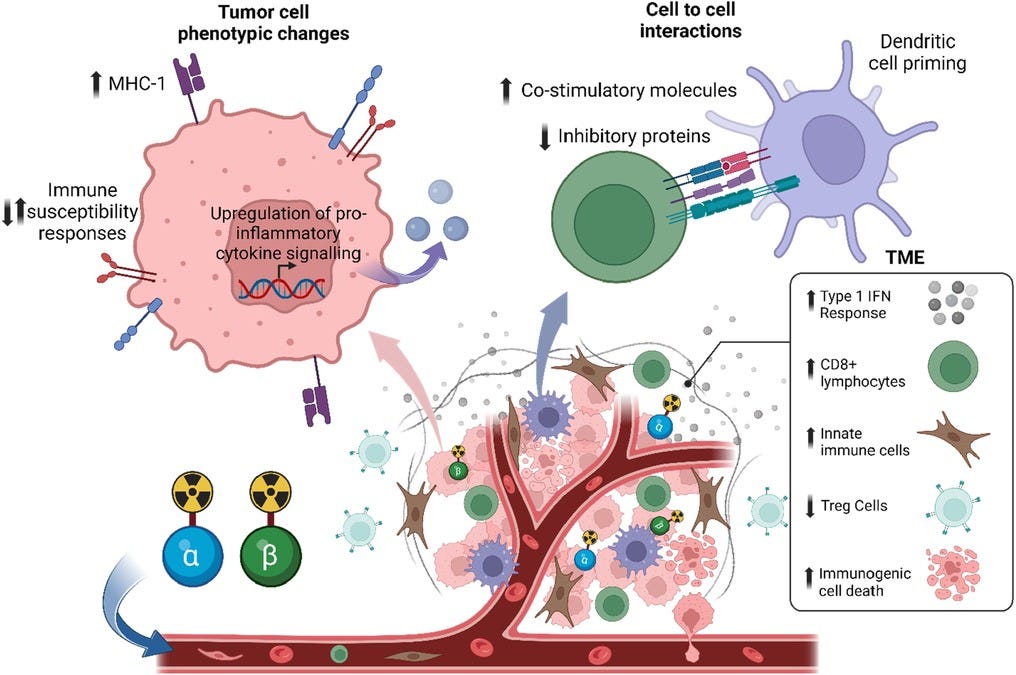
A clearer understanding of hormetic responses of low doses of radiation to the body are one of many active areas of research in the immunological responses to radionuclide therapy.
CDC. Cancer Data and Statistics. CDC statistics on Cancer
Guo, Zhibin, et al. "Targeted Radionuclide Therapy Activates Prodrugs for Treating Metastasis." ACS Central Science (2024).
Shea AG, Idrissou MB, Torres AI, Chen T, Hernandez R, Morris ZS and Sodji QH (2024) “Immunological effects of radiopharmaceutical therapy.” Front. Nucl. Med. 4:1331364.
Stella, Valentino J. "Prodrugs as therapeutics." Expert opinion on therapeutic patents 14.3 (2004): 277-280.
Wan, Y., Liu, J., Mai, Y. et al. “Current advances and future trends of hormesis in disease.” npj Aging 10, 26 (2024).