

Potential Replacements to Plastic
Suitable replacements to plastic are coming.

When plastic was first introduced into the world more than 150 years ago, it was produced as a replacement to wood and metal products. The burgeoning oil industry was making its way to becoming a dominant force in world economies. Oil was cheap and abundant. While initially, scientists were utilizing plant by-products to produce novel materials—materials that could be used as paints and replacements to wood-by products utilized in building materials. One of the first synthetic plastics was known as bakelite, and it was invented by Leo Baekeland. While the reactions to produce plastic resins were first known as far back as 1872, one of Baekeland’s accounts appears in an American Chemical Society publication in March 1909 (Baekeland).
In his ACS paper, Baekeland discusses properties of bakelite,
“…[I]t is very hard, cannot be scratched with the fingernail; in this respect it is far superior to shellac (a rubber plant derivative) and even to hard rubber. … it is far superior to hard rubber, casein, celluloid, shellac and in fact all plastics” (Baekeland).
From the descriptions by Baekeland, it is easy to see why this early plastic came to be in such high demand. However, what was unknown was the susceptibility of bakelite to nano-and micro-scopic decomposition.
However, the synthetic plastics industry took off with the general public in the immediate years after WWII. While synthetic plastic was utilized in the years before WWII, it was WWII that put plastic to widespread use. It was in the battlefield that the US Army found uses for plastic. Moreover, with the invention of nylon by DuPont in 1938 by Wallace Carothers, nylon parachutes found widespread use (Chalmin). It is a certain curiosity that plastics have found widespread uses since WWII, but we have only now seen the widespread effects of micro- and nano-plastics on the biosphere. The fact is that in 2023, the world produced 400,000,000 tons of plastic (Pilapitiya). Moreover, plastic packaging contributes to 46% of all plastic waste generated annually—the amounts of synthetic plastic in the environment have grown exponentially since WWII (Van der Perre).
Because micro- and nano-plastics are now found in our bloodstreams and throughout much of the food chain, suitable alternatives are sought. Namely, researchers are looking for bio-degradable alternatives to synthetic plastic. They are feverishly looking for a suitable replacement, and they are getting closer to finding that replacement(s).
A Replacement to Plastic Packaging?
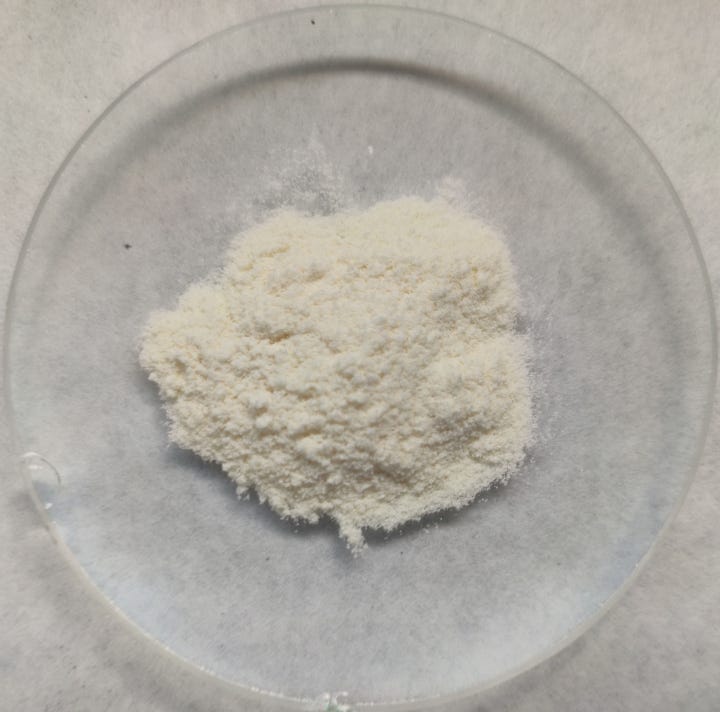
Chitosan is a material of interest, and it is the exoskeleton material of crustaceans—primarily shrimp and crabs. Researchers are able to modify chitosan by embedding it with a zinc oxide and citric acid to produce a “plastic-like substance” that can also extend shelf-life of perishable foods —like fruits and vegetables.
Quoting the workers,
“[R]emarkably, there were no signs of microbial contamination in the chitosin/citric acid/zinc oxide packaged fruit” (Rani).
While the work is still preliminary, incorporating Zinc oxide is somewhat controversial since it is an anti-microbial and the possibility of furthering anti-biotic resistance is a potential downside.
Stay tuned for further developments.
______
Baekeland, Leo H. "The synthesis, constitution, and uses of Bakelite." Industrial & Engineering Chemistry 1.3 (1909): 149-161.
Chalmin, Philippe. "The history of plastics: from the Capitol to the Tarpeian Rock." Field actions science reports. The Journal of Field Actions Special Issue 19 (2019): 6-11.
Pilapitiya, PGC Nayanathara Thathsarani, and Amila Sandaruwan Ratnayake. "The world of plastic waste: a review." Cleaner Materials 11 (2024): 100220.
Rani, Raj, et al. "Fabrication of Antimicrobial Films Based on Cross-Linked Chitosan Nanocomposite in Food Packaging Applications." ACS Food Science & Technology 5.1 (2024): 336-349.
Van der Perre, Stijn, et al. "Modelling of carbon flows in the value chain of packaging plastics in the context of sustainable carbon management." Sustainable Production and Consumption 49 (2024): 12-27.