

Note: Nuclear Energy
Nuclear Power wants to make new Renaissance, but obstacles stand in the way.

Background
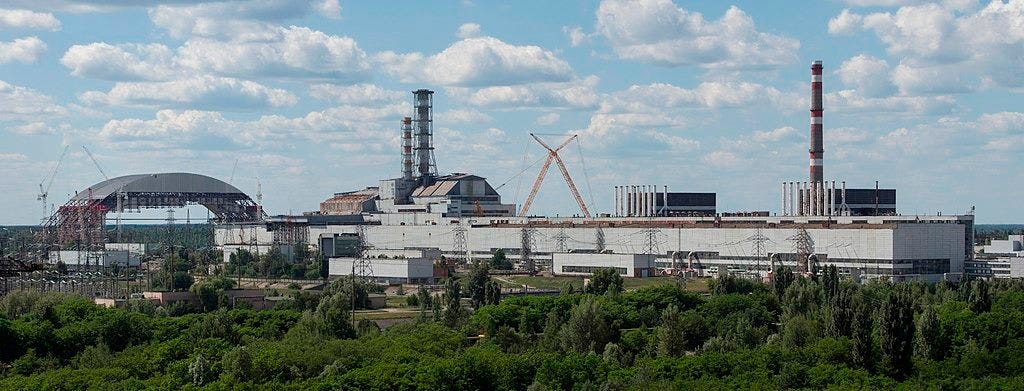
When the greatest generation produced the atomic bomb to end World War II in 1945, the science behind atomic energy looked as if it would meet US energy needs into the next century. Atomic power, as an energy source, appeared limitless. Moreover, a small amount of a radioactive substance can produce a large amount of power. However, it is the ubiquitous nature of spent nuclear isotopes that make it the bane to humanity. However, from 1947 to 2011, there were no fewer than 7 distinct incidents surrounding nuclear power. The majority of these occurred in the Soviet Union (now present day Russia and the Ukraine). Most incidents in Russia resulted from bad disposal and storage practices (with the exception of Chernobyl—which resulted from operator error). [I will eventually cover incidents that occurred in Russia in separate publication.] Other incidents include the Fukushima incident of 2011, the Windscale Piles incident in the UK of 1957, and a major incident in the US—Three Mile Island of 1979. While operating nuclear reactors are extraordinarily complex, proponents of nuclear energy are proposing a new generation of reactor: Small Modular Reactor (SMR).
Proponents of SMRs tout this new generation of reactor as safer than traditional reactors. Moreover, they have some valid points, but some experts beg to disagree. SMRs are mobile reactors.
The Proposal
While conventional reactors are serviced and operate in one large location, SMRs are serviced at facilities away from the their location of operation. For instance, an SMR can be used to operate the power requirements of a large hospital complex for years. However, once the fuel is spent the reactor vessel is serviced and replaced with a new reactor vessel. The spent reactor is then put into a landfill like the proposed one at Yucca Mountain in Nevada to be stored for thousands of years. This is where researchers from University of Pennsylvania in 2022 cite these SMRs will generate more waste than conventional nuclear reactors,
“These findings stand in contrast to the waste reduction benefits that advocates have claimed for advanced nuclear technologies. More importantly, SMR waste streams will bear significant (radio-)chemical differences from those of existing reactors. (Krall).”
While this study throws a lot of cold water on the issue of updated nuclear technologies, the issue is far from dead. The proponents of nuclear energy are not standing-pat with the status quo. Moreover, as technology advances —look for nuclear technology to improve. While this may not be in some people’s future, our children’s children may not have the luxury of dispensing with nuclear technology.
—
Krall, Lindsay M., Allison M. Macfarlane, and Rodney C. Ewing. "Nuclear waste from small modular reactors." Proceedings of the national academy of sciences 119.23 (2022): e2111833119.
Imagine there is table on which 1000 balls are placed. 997 of them are red and 3 are green. You have one tiny white ball on your hand, with which you can hit any of those 1000 balls. If you hit a red ball with the tiny white ball, nothing happens. Only the tiny white ball gets deflected with a reduced speed. But if you hit any of those 3 green balls with the tiny white ball at a right speed (neither too fast, nor too slow), the green ball disintegrates into 2 smaller black balls, and 2 more tiny white balls are produced. If any of these 2 tiny white balls, after attaining the right speed (neither too fast, nor too slow) hits another green ball, the same process gets repeated. The red ball stands for Uranium-238, the green ball stands for Uranium-235 and the white ball stands for neutron. The process of disintegration of the green ball into 2 black balls is called fission. Mass of the 2 black balls together is lesser than that of the green ball. This mass difference gets converted into energy. The green ball, which gets disintegrated on being hit by a white ball is called fissile material.
Natural Thorium (Th-232) is not fissile. Sustained controlled fission chain, where one fission reaction leads to another fission reaction and so on, is not possible with Th-232. Therefore, it is not possible to build natural Thorium based nuclear reactors.
In order to use the vast Thorium reserve, enough Plutonium based reactors are needed. These reactors are also called fast breeder reactors (FBRs). We do not have any operational Fast Breeder Reactor yet. One 500 MW plant is under construction. http://bhavini.nic.in/Userpages/ViewProject.aspx
Natural Uranium contains two isotopes, U-235 (0.7%) and U-238 (99.3%). Out of these two isotopes, only U-235 is useful for nuclear reactors, as it is fissile. U-238 is not fissile, similar to Th-232. However, this U-238 gets converted into Plutonium (Pu-239) during its stay inside the Uranium reactors by absorbing one neutron. This Pu-239 can then be extracted and used as fuel in Fast Breeder reactors. Therefore to sustain the Fast Breeder Reactors, enough Plutonium from Uranium based reactors is necessary. The only way it can be done is to have enough operational Uranium based reactors. This is why India is importing Uranium to sustain Uranium based reactors.
As mentioned above, Pu-239 will be used in Fast Breeder Reactors as fuel, but a blanket, or coating of Th-232 will be placed over Pu-239 (the fuel). This Th-232, during its stay inside the Fast Breeder Reactor, will get converted into Uranium-233 by absorbing one neutron. Uranium-233 is fissile but is not naturally occurring.
This Uranium-233 can then be extracted from the spent-fuel, and used as fuel in another type of reactors. Now, if you place a blanket of Th-232 over this Uranium-233 fuel, that blanket will again get converted into Uranium-233 during its stay inside the reactor by absorbing one neutron, and we will have a process where fuel can be re-generated inside the reactor! Though Uranium-233 is the fuel in these reactors, they are also termed as Thorium based reactors.
Thus in order to reach the Thorium based energy generation, building enough Plutonium stock for fast breeder reactors is necessary, which can only be done by having enough Uranium based electricity generation.