
Medicinal Psychedelics
A new generation of mental health medicines may be on the horizon.

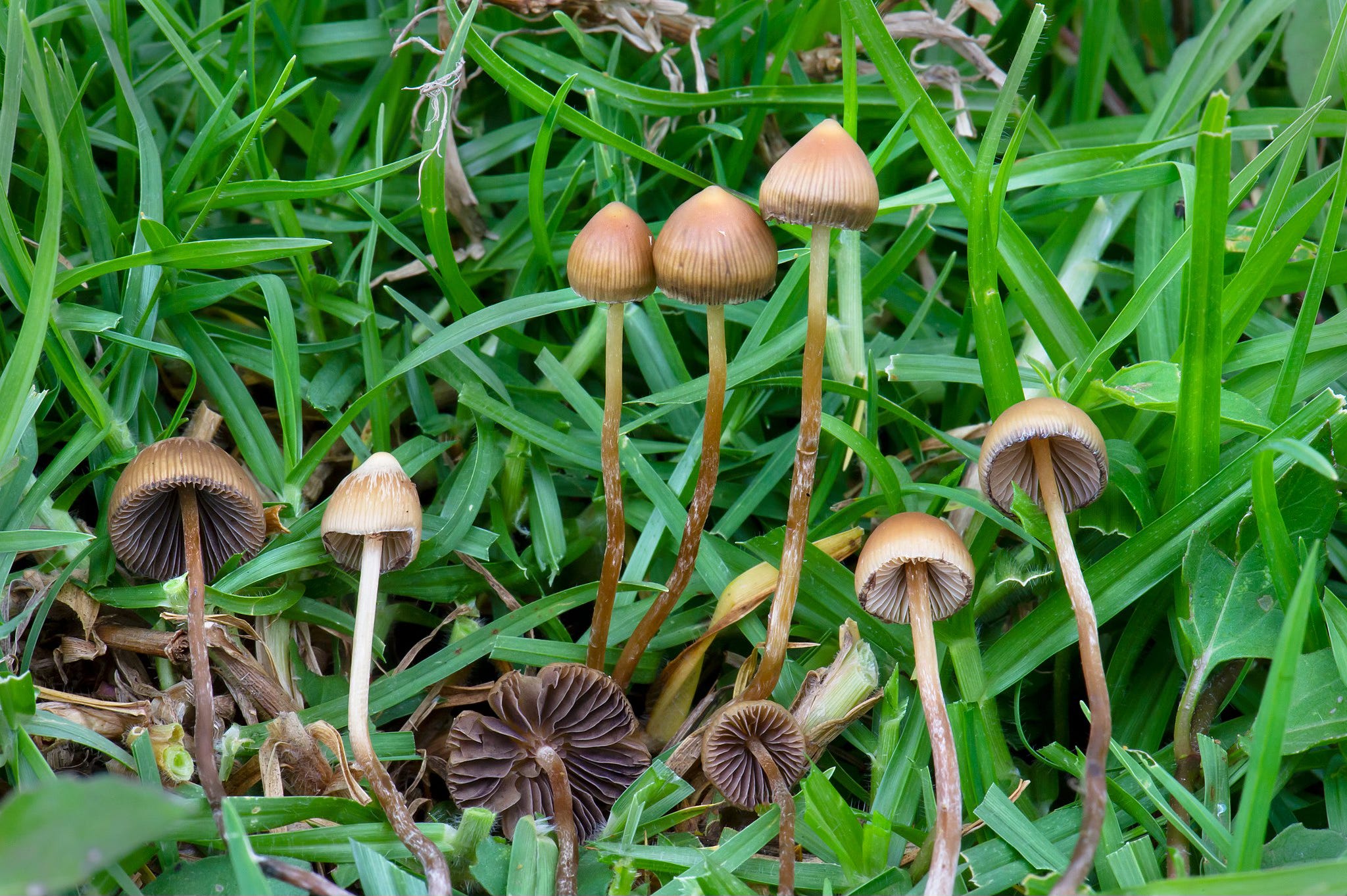
Magic mushrooms — a source for psilocybin.
Alan Rockefeller, CC BY-SA 4.0 <https://creativecommons.org/licenses/by-sa/4.0>, via Wikimedia Commons
When pharmaceutical chemists set out to find effective agents to treat illnesses, they base new molecules on what already works —or is known to have worked in the past. They make alterations to known molecules based upon scientific data (and on occasion— scientific intuition). They test potential drugs on animals and subsequently people (in the latter stages).
The medicinal chemistry revolution of the twentieth and twenty-first centuries is set to make further advances in the treatment of resistant illnesses. However, for some individuals, the advances in medicinal chemistty cannot come fast enough. One case in point is treatment-resistant depression. Moreover, suicide rates increased during the COVID-19 pandemic (Stone).
With the advent of Prozac and its related anti-depressants in the early 1990s, it seemed as if those who suffered from severe clinical depression possessed hope. While the newer generation of anti-depressants showed promise for treating depression, there remained a small percentage of individuals who were treatment resistant. The question became, how do we treat depression that seemingly was intractable?
Scientists wondered how drugs like mescaline worked. Moreover, peyote is used as a ritualistic drug by North American Indians, and its properties induced psychotic-like behavior, at times. Medicinal chemists intuited on the basis of those pharmacological properties that they could affect positive change in those who suffered from depression.
Enter Psychedelics
While psychedelics have a long history, one of earliest reported uses of a psychedelic is from peyote cactus (commonly known as mescaline) in North America (Aday). Psilocybin (magic mushroom) is another psychedelic with a long history throughout many parts of the world. Scientists have found that drugs like mescaline and LSD behave similarly when treating depression (but not identically). Whereas Prozac will prevent sertonin from leaving receptors (known as an SSRI), psychedelics like LSD induce more serotonin production. Different psychedelic drugs seemingly have different modes of action — behave differently in the brain. Moreover, research is ongoing.
In 1938, Albert Hoffman synthesized LSD (Rucker), and researched it properties for nearly ten years. The reasons for its creation was its molecular similarity to other known psycho-active substances but it was nearly overlooked because animal studies were inconclusive. In an accidental ingestion by Hoffman, he realized the potential properties of this mood altering drug and informed his employer.
“Recognising that its psychoactive properties were likely to be of interest both to psychiatrists and academics, it (LSD) was marketed in 1947 under the trade name ‘Delysid’ and made freely available to those interested in researching its properties“ (Rucker).
Serotonin
As evidence mounted that serotonin (a mood altering neurochemical) was responsible for the effects of LSD on human behavior, research was conducted by various parties: both government and industrial settings tried to understand mood altering drugs. However, after nearly 20 years of LSD research, LSD was uniformly banned by the United Nations in 1967 (Rucker). While LSD remains one of the most researched psychoactive drugs, it remains on the fringes of potential drug therapy. Another psychoactive substance is currently more promising: psilocybin (MacCallum). Magic mushrooms (as they are commonly called) are now being studied as replacements to SSRI drugs. Moreover, quoting the MacCallum study,
“The US Food and Drug Administration granted breakthrough therapy status to psilocybin in 2018 for treatment-resistant depression, and in 2019 for major depressive disorder” (MacCallum).
Current research suggests that psilocybin is effective and non-toxic when used under a doctor’s supervision (Preechap).
Jacob S. Aday, Emily K. Bloesch & Christopher C. Davoli. “Beyond LSD: A Broader Psychedelic Zeitgeist during the Early to Mid-20th Century.” Journal of Psychoactive Drugs, 2019. https://doi.org/10.1080/02791072.2019.1581961
Food and Drug Administration. "Psychedelic drugs: Considerations for clinical investigations guidance for industry (Draft guidance)." Docket: FDA-2023 (2023).
Richard A. Glennon and Małgorzata Dukat “1-(2,5-Dimethoxy-4-iodophenyl)-2-aminopropane (DOI): From an Obscure to Pivotal Member of the DOX Family of Serotonergic Psychedelic Agents – A Review.” ACS Pharmacology & Translational Science, 2024 7 (6), 1722-1745.
MacCallum, Caroline A., et al. "Therapeutic use of psilocybin: Practical considerations for dosing and administration." Frontiers in Psychiatry 13 (2022): 1040217.
David Nutt. “Psychedelic drugs—a new era in psychiatry?” Dialogues in Clinical Neuroscience, 2019 21:2, 139-147. https://www.tandfonline.com/doi/full/10.31887/DCNS.2019.21.2/dnutt?src=recsys
Deena Prichep. “In Oregon, psilocybin treatment is an experiment in real time.“
Rucker, James JH, Jonathan Iliff, and David J. Nutt. "Psychiatry & the psychedelic drugs. Past, present & future." Neuropharmacology 142 (2018): 200-218.
Stone, Deborah M. "Notes from the field: recent changes in suicide rates, by race and ethnicity and age group—United States, 2021." MMWR. Morbidity and Mortality Weekly Report 72 (2023).