

Ginger— the Medicinal?
Ginger has been used to control morning sickness.

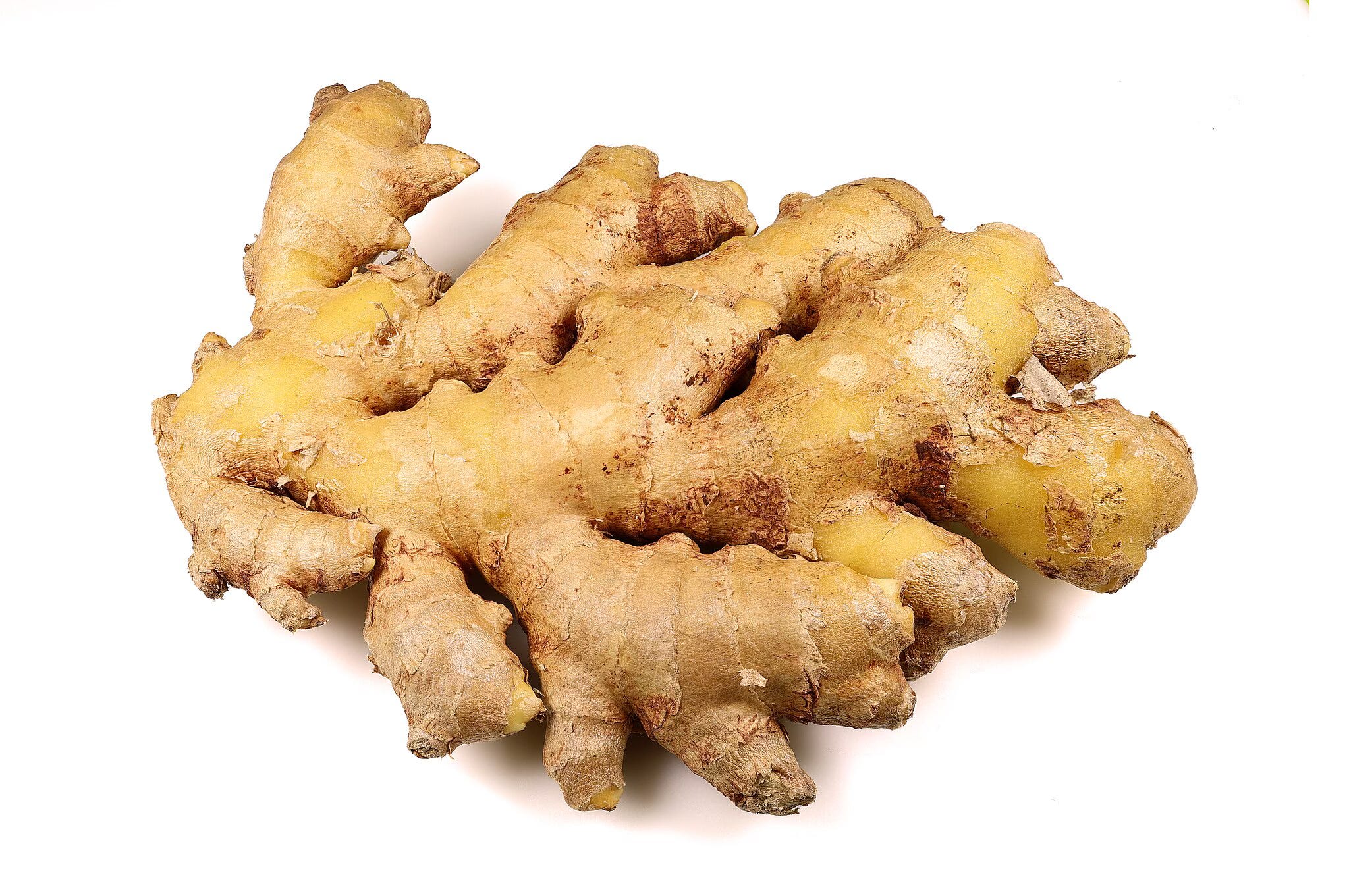
Ginger
Sanjay Acharya, CC BY-SA 4.0 <https://creativecommons.org/licenses/by-sa/4.0>, via Wikimedia Commons
If anyone has ever consumed ginger, you can be sure that it has a calming effect. Moreover, some women have turned to ginger to help endure morning sickness (Giacosa). (While the spice does help most individuals control unwanted vomiting, please use it with the knowledge that real medical intervention is best—consult your MD.) With all of that in mind, lets try to understand the spice.
Ginger is a ‘root-like spice’ —or rhizome. The difference between a root and a rhizome lies in its vertical orientation and function. Whereas roots primarily act as a conduit for plant growth, ginger is better classified as part of the stem but grows horizontally underground. Ginger rhizomes act in asexual reproduction (without bee fertilization). In essence, a rhizome can produce a new plant ( Britannica).
Not only has ginger been touted for its uses in morning sickness, but ginger is being investigated for a number of other potential uses. From anti-parkinsonian properties to potential anti-cancer properties, researchers from around the world are testing it. However, what can be stated without hesitation is ginger is not a cure-all or a panacea. So, why is it being investigated for so many different uses?
Like many plants that have medicinal properties, scientists seek to understand their properties for at least four reasons: (1) is there a monetary benefit to is utilization? (2) where can it be best used for the benefit of others? (3) where does it fit into the grand scheme of science? (4) does it satisfy some innate, intellectual curiosity? As brutal (or practical—depending on your level of sophistication), it is the reality behind science. However, I digress, so lets get back to discussing ginger.
Areas of Investigation?
One area of investigation is its anti-diabetic properties for type II diabetes. The latest reseach indicates that ginger hasd some anti-diabetic properties. Quoting a study by US researchers,
“ …patients who took 2 grams of ginger for two months revealed a reduction in insulin …” (Yedyou).
While the researchers stress the result are preliminary, the implications may eventually impact many if the research pans out positively.
Another area of investigation is the potential role ginger has in reactive free radicals,
”… ginger bioactive compounds have significant antioxidant potential to restore or maintain normal oxidative stress levels” (Shaukat).
Another area of investigation is the potential role ginger has in Parkinson’s disease. While the results are preliminary, early indications seem to suggest fresh ginger protects neural pathways (Shaukat). However, much more research needs to be done.
Other roles include anti-biotic and preventing heart disease (Shaukat). Moreover, as in the Parkinsonian case, much more research is needed if the spice can be shown to induce healthy outcomes.
Britannica, The Editors of Encyclopaedia. "rhizome". Encyclopedia Britannica, 2 May. 2024, https://www.britannica.com/science/rhizome.
Giacosa, A., et al. "Can nausea and vomiting be treated with ginger extract?.” European Review for Medical & Pharmacological Sciences 19.7 (2015).
Shaukat, Muhammad Nouman, Akmal Nazir, and Biagio Fallico. "Ginger Bioactives: A Comprehensive Review of Health Benefits and Potential Food Applications.” Antioxidants 12.11 (2023): 2015.
Yedjou, Clement G., et al. "The management of diabetes mellitus using medicinal plants and vitamins." International journal of molecular sciences 24.10 (2023): 9085.
I have found that not only does it help the nausea I experience with cancer, it also alleviates pain. Take a trunk of ginger and put it in water for pain. For stopping nausea, have ginger tea.