

Elevating Mood During Winter's Darkness?
Can Achievable Tasks Elevate Mood when Sunlight is Diminished?

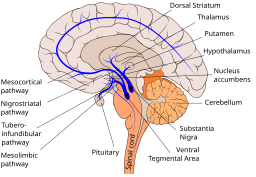
The dopamine highways of the brain are just one path of feeling well. Source: Slashme; Patrick J. Lynch; Fvasconcellos, CC BY-SA 4.0 <https://creativecommons.org/licenses/by-sa/4.0>, via Wikimedia Commons
Knowing how to utilize endorphins, the brain’s feel good chemicals, may help one feel better during the dark days of winter. While the dark days of winter are known to afflict people with Seasonal Affective Disorder (SAD), one does not need to be held hostage to it. Ways to combat SAD during the winter months are numerous, and some center upon taking proactive steps to circumvent the overwhelming feelings of gloom. Oftentimes, doctors will tell their patients to get more sunshine or get out, even if sunshine is limited. Moreover, diminished amounts of sunlight are responsible for SAD diagnoses.
Can We Use the Feel Good Chemicals of the Brain?
When we set out to create something from scratch or create a work of art or words or exercise, we utilize parts of the brain that release endorphins. Just as I write this piece, I seem to feel a release of dopamine. Some acts of creation involves the hands and brain simultaneously; it supposedly releases dopamine in the brain. However, not all forms of creation are equal. While I get enjoyment from putting words to screen, researchers are split as to whether the act of writing produces excesses of dopamine in the brain. Perhaps, such forms of creation impact those who may be less depressed to begin with.
Moreover, in the work, Expressive writing as a therapeutic intervention for people with advanced disease: a systematic review, by Dr. N. Kupeli and co-workers from the Marie Curie Palliative Care Research Department, Division of Psychiatry, University College London, studied the effects of writing on that those afflicted with PTSD or a life threatening illness. According to their conclusions, the afflicted gained little from writing about their experiences and feelings. What gives?
Does Creating Art or Writing Positively Impact Some but Not Others?
Perhaps, it is the approach by researchers who studied the acts of creation. There are a handful of feel good chemicals in the brain. While dopamine is the most widely cited feel good chemical, there are others to consider. Namely, the other feel good chemicals may positively impact mood: oxytocin and serotonin. When we set a goal and achieve it after a bit of struggle or work, we will feel accomplishment and reward. There is more than one endorphin at play when we experience this. It seems rather plausible that all of feel good chemicals act in concert to alleviate feelings of depression and sadness. It may not be just a single biochemical —namely, the brain is a complex piece of machinery. All of the feel good chemicals acting together most likely play a significant roles in modulating your mental health. However, as the winter solstice comes upon us, we must bear in mind that we are in this together, and no amount of isolation will help one’s own feelings of loss or despair. If you are feeling more depression than you have in recent years, please seek medical intervention.
Kupeli, Nuriye, et al. "Expressive writing as a therapeutic intervention for people with advanced disease: a systematic review." BMC palliative care 18 (2019): 1-12.