

Bio-engineering Coral
In the future, it may be possible to bio-print coral on a large scale.

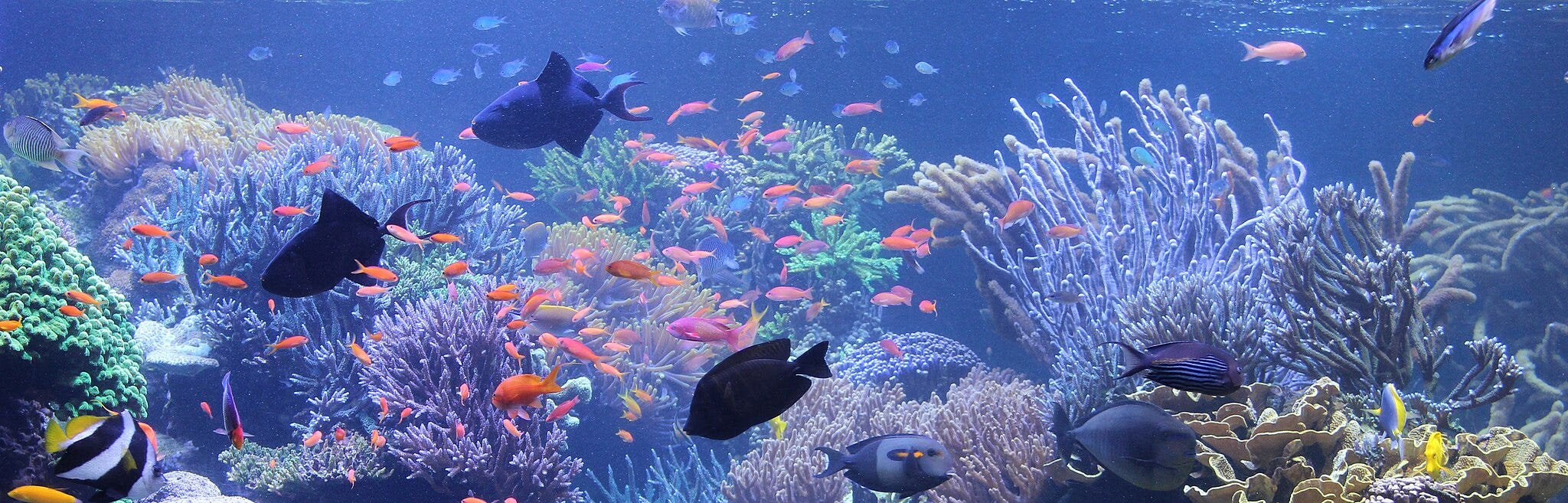
Healthy coral is a thing of the past.
Liaquarium, CC BY-SA 4.0 <https://creativecommons.org/licenses/by-sa/4.0>, via Wikimedia Commons
Climate change brought a disturbing selection of problems to the ocean’s survival. From a loss of biodiversity to plastic garbage, it is clear that humanity has endangered its place on the planet. Whether we like it or not, large patches of ocean life are dying off, and coral is included. Resuscitating coral diversity is a major player in what is regarded as saving the life of the planet. The earth is one large, interconnected biosphere. If the Amazon rain forests are imperiled, not only are it’s indigenous peoples imperiled, but so are we. The connections may not be clear to everyone; however, given a long enough time and large enough extent, local climates have been imperiled by damaging other parts of the world’s biosphere. Over the last 100 years, ocean temperatures and chemistries have changed dramatically, as well. Rising ocean temperatures and adverse chemistries have also damaged corals throughout every ocean—bleached corals are becoming normal.
Researchers are investigating ways to mitigate the problems of coral loss and bleaching. Among the many ways of mitigating coral losses, asexual engineering through 3-dimensional bio-printing emerges as a promising method for large scale mitigation. In the last three years, researchers from across the globe have reported successes with bio-engineering corals utilizing sustainable methods. Namely, one of the first successes was reported in the journal Advanced Functional Materials in 2022 (Wangpraseurt). The international team of researchers from across three continents report a novel concept: bio-printing coral. “… bionic 3D printed corals have been produced” (Wangpraseurt).
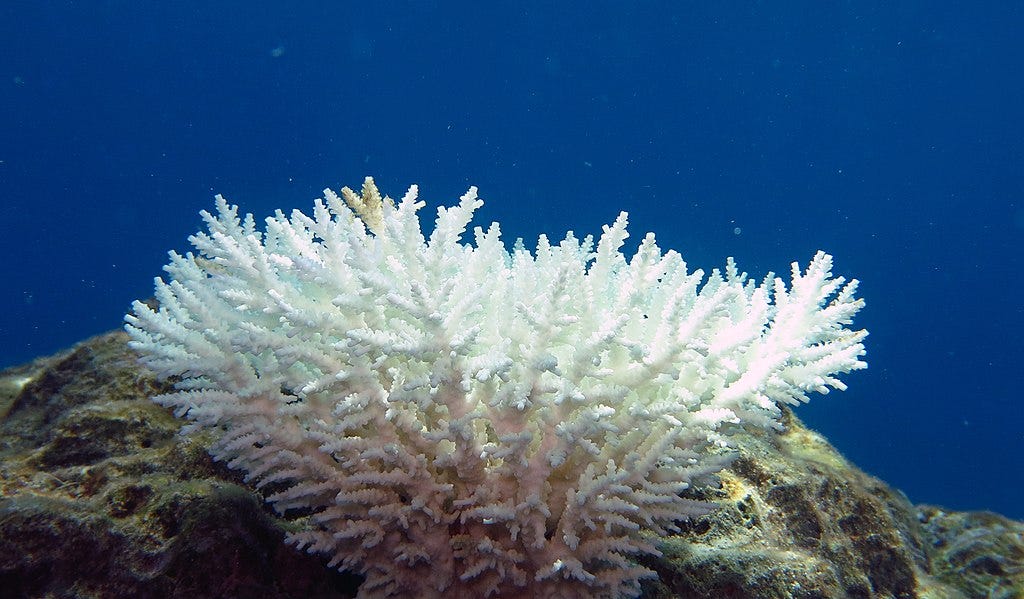
Bleached coral at The Great Barrier Reef
Vardhanjp, CC BY-SA 4.0 <https://creativecommons.org/licenses/by-sa/4.0>, via Wikimedia Commons
Quoting Wangpraseurt and co-workers,
“The living bioprinted tissue microhabitats were constructed with a symbiont bio-ink which facilitated the growth and photosynthesis of coral photosymbionts“(Wangpraseurt).
In other words, by utilizing 3D printing technology, the workers reproduced the scaffolding of living coral using a three step process: reproducing the skeletal structure, the gastric passages, and the oral passages. The 3-D print technology utilized biologic materials normally found in corals. Once the coral architecture was constructed, the next step is to introduce living ocean organisms to inhabit its bio-mimicked skeleton. Further quoting the researchers,
“We anticipate that the fabricated living coral microenvironments will find wide applications in coral reef science and will be further developed as a next-generation technology for coral stress and bleaching studies, ultimately paving the way for the engineering of novel biomaterials and artificial coral reefs“ (Wangpraseurt).
Related Research
In similar research, living corals were introduced onto different substrates in the hopes of an eventual adaptation to more adverse ocean chemistries. Researchers from Portugal report adapting recycled materials as substrates from diversifying the types of coral species that can adapt to different ocean chemistries.
By using substrates as diverse as rice husk and limestone, the workers were able to adapt different kinds of coral and ocean bio-organisms onto the living coral. The research is significant in that industrialized waste could be transformed into bio-safe materials for living organisms. Quoting the researchers,
“Various mortar formulations, including limestone, dolomite sand, mussel shell, pozzolan materials, and different types of cement, were developed and evaluated through experiments focusing on additive manufacturing, pH variation in seawater, and the impact on coral growth (Matus).“
Ilse Valenzuela Matus, Joaquim GóisPaulo, Vaz-PiresJorge, Lino Alves, Jorge Lino Alves. “Coral Propagation in Substrates Obtained Through Additive Manufacturing: Influence of Mortar Formulations on Seawater Parameters.” ACS Sustainable Chemistry & Engineering, 2024, XXXX, XXX, XXX-XXX https://doi.org/10.1021/acssuschemeng.4c01276
Wangpraseurt, Daniel, et al. "Bioprinted living coral microenvironments mimicking coral‐algal symbiosis." Advanced Functional Materials 32.35 (2022): 2202273.