
Antibiotic Resistance—Part 2
How?

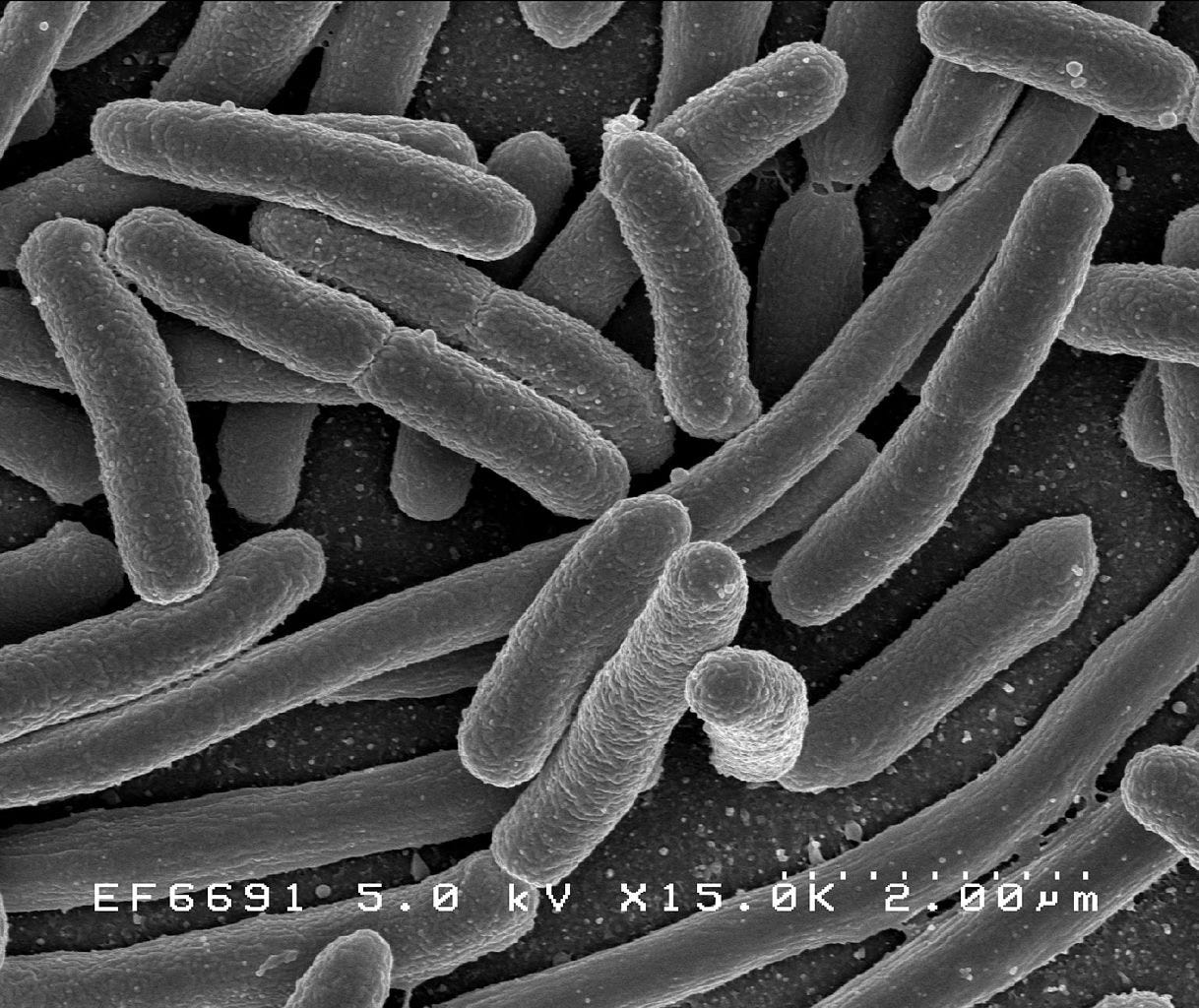
E. Coli Bacteria
NIAID, Public domain, via Wikimedia Commons
Reasons for antibiotic resistance are not a complete surprise. However, as we delve into the reasons for human antibiotic resistance, we need to be aware of the fact that the world is now awash in synthetic chemicals. From nano- and micro-plastics to heavy metal pollution (mercury and lead) to pesticides, the natural biome of the world has been poisoned by the reckless abuse of chemicals. It comes down to understanding concept of sustainability.
Sustainability is defined by the United Nations Brundtland report of 1987 as: “meeting the needs of the present without compromising the ability of future generations to meet their own needs.”
When we look back at this era, what should be striking is the propensity of humanity to repeat some of its same mistakes from one generation to the next. The world tends to undergo cyclic catastrophes from time to time. The catastrophes center upon the world’s lack of preparation from its abuse of the biosphere. Moreover, there is precedent.
The Ancestral Puebloans
The Ancestral Puebloans occupied the Four Corners region of the present-day United States. Their stories are well-documented. They suffered drought and resulting stressors from the drought pushed their society apart. Their ancestors became what is known as the Zuni and the Navajo nations. Their failure to adapt to drought is a prime example of the kind of issue we are about to face with stressors to the biosphere.
As intimated earlier, we are awash in sytnthetic chemicals. Added to that issue, climate change has altered the environment. Viruses and bacteria are hardier as a result of that combination.
Bacteria Adapt to Change
Bacteria and life, in general, evolve to change in much the same that we have evolved to our fittest. It is survival— a dog-eat-dog kind of survival. The two most common types of bacteria are called Gram-positive and Gram-negative. The bacteria that is associated with the most resistant to antibiotics are the Gram-negative type. The Gram-negative bacteria are, presently, the becoming multi-drug resistant. It is because of this that lives are put into jeopardy.
Cancer patients, whose immune systems are compromised, are put in danger from ineffective antibiotics. In fact, anyone with a compromised immune system is potentially in danger from multi-drug resistant bacteria. However, the reasons for the situation are humanity’s to bear. We have put ourselves in this situation.
1. Blair, Jessica MA, et al. "Molecular mechanisms of antibiotic resistance." Nature reviews microbiology 13.1 (2015): 42-51.
United Nations Brundtland Commission Report (1987):