

Anthropocene
The era of man is fraught with danger, but there are a few glimmers of hope.

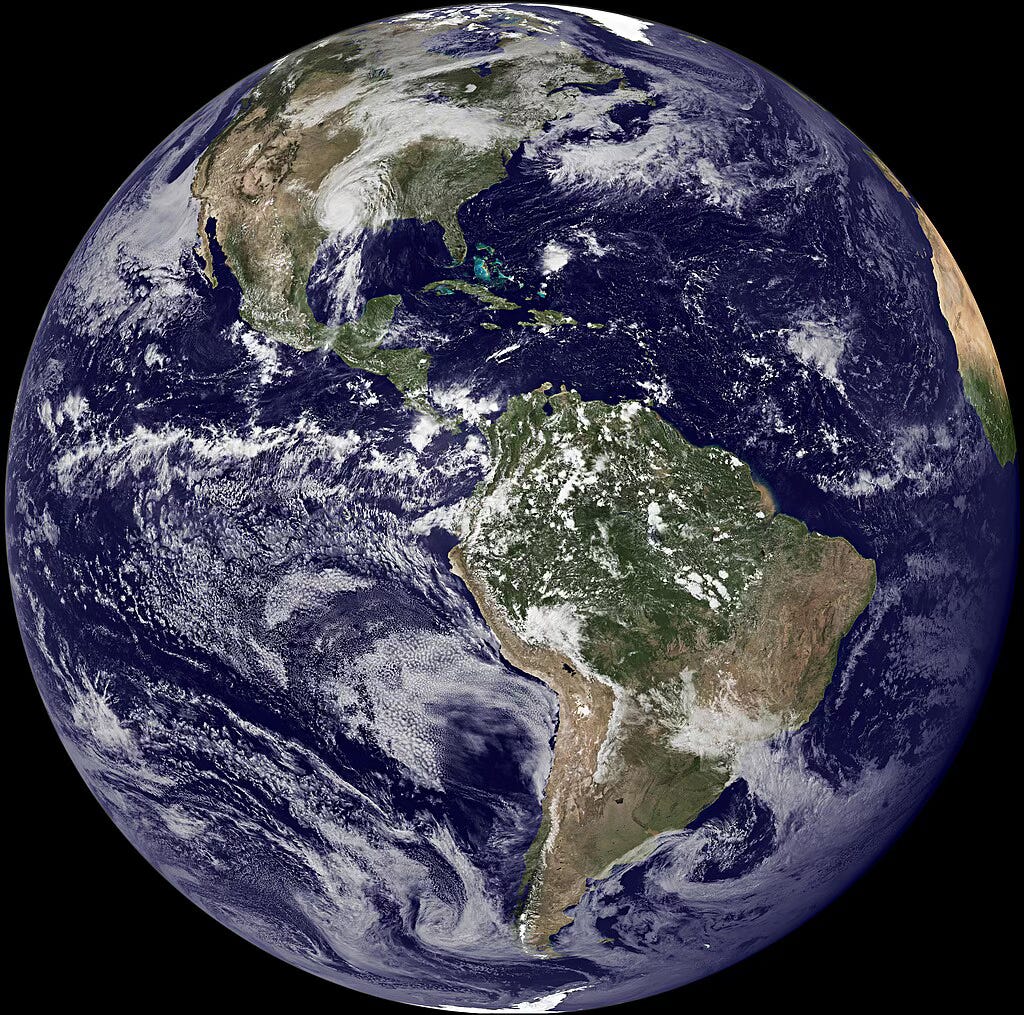
GSFC team, cropped & up-sampled by Jason Harwell, Public domain, via Wikimedia Commons
The Anthropocene is the present period that we find ourselves mired. Not only is it an era of much trepidation, but it is also a time in which humanity may not survive. The common definition of the term Anthropocene is the era of Man (1). Its beginnings commenced when we began to alter the climate beyond a point of partial no-return. That is approximately 10 years ago. While we cannot readily ameliorate all the effects that have transpired as the climate changes, we can slow its effects as best we can through changes of daily living. One such area is the burning of biomass. Biomass burning is a pollutant that comes from the burning of wood—the mass clearing of forests in the Amazon and grassland burnings. One neglected component of biomass burning is residential fireplaces.
Studies have shown that replacing common logs or wood with wood pellets reduce the amounts of organic components in the smoke (2). The organic components contribute to unhealthy patterns of pollution in cities and towns throughout the world. Namely, certain cities in the U.S. forbid the use of fireplaces and woodburning stoves in times of heightened pollution during certain winter months. The replacement of wood pellets for logs offers a glimmer of hope to those concerned with the effects of climate change.
—
(1) Colin N. Waters et al., The Anthropocene is functionally and stratigraphically
distinct from the Holocene. Science 351, aad2622(2016). DOI:10.1126/science.aad2622.
(2) Michael Priestly, et al., Volatility Measurements of Oxygenated Volatile
Organics from Fresh and Aged Residential Wood Burning Emissions, ACS Earth and
Space Chemistry. https://doi.org/10.1021/acsearthspacechem.3c00066.
Further Reading:
Boris Leroy, et al., Major shifts in biogeographic regions of freshwater fishes as
evidence of theAnthropocene epoch, Science Advances, 9, 46,
(2023)./doi/10.1126/sciadv.adi5502.
Katherine Richardson, et al., Earth beyond six of nine planetary boundaries, Science
Advances, 9, 37, (2023)./doi/10.1126/sciadv.adh2458.
P. Falkowski, et al., The Global Carbon Cycle: A Test of Our Knowledge of Earth as a
System. Science 290, 291-296 (2000). DOI:10.1126/science.290.5490.291.